

The morning sun filtered through the dense canopy of the Satpura hills as our vehicle navigated the winding forest roads leading to Patalkot. Located just 35 kilometers from Tamia in Madhya Pradesh, this hidden valley promised something rare in today’s world—an authentic encounter with indigenous culture. Our journey to meet the Bharia tribe began with equal parts excitement and reverence, knowing we were about to step into a world where ancient traditions still pulse with life. What awaited us was not just a travel experience, but a profound lesson in cultural preservation, sustainable living, and the importance of respectful engagement with indigenous communities.
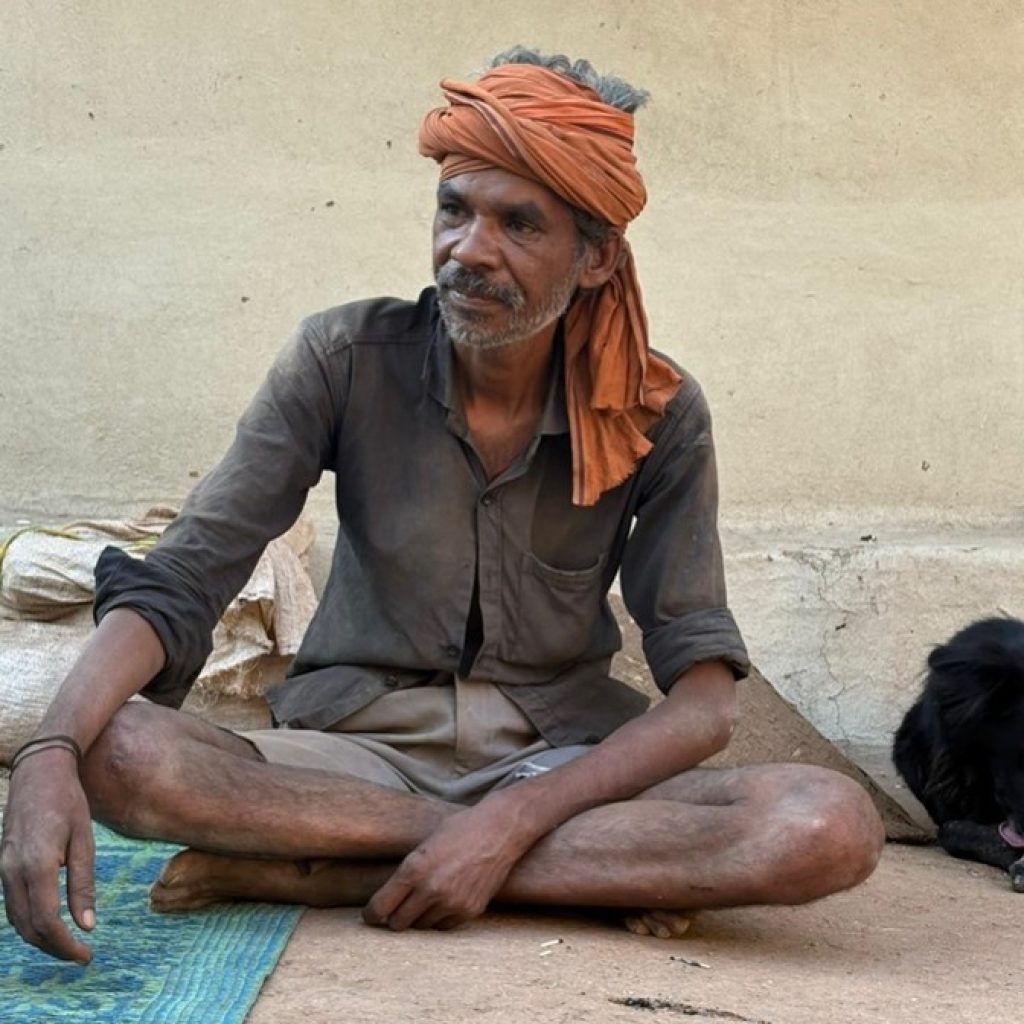
The Bharia tribe is one of the most fascinating indigenous communities of Central India, primarily found in the Patalkot Valley and surrounding regions of Chhindwara district. Known for their deep knowledge of medicinal plants, strong connection with nature, and rich cultural traditions, the Bharia tribe has lived in these forests and valleys for generations. They belong to the larger Gond tribal group and have maintained their distinct cultural identity despite the pressures of modernization.
Traditionally, the Bharia community depended on agriculture, forest produce, and herbal medicine. Even today, many members of the tribe possess remarkable knowledge of the forests and the medicinal plants that grow within them. Their way of life reflects a harmonious relationship with nature, making them an important part of Madhya Pradesh’s cultural heritage.
Exploring Bhariya janjati patalkot offered us insights into traditional medicinal practices and indigenous knowledge that have been passed down through oral traditions. The Bhariya janjati patalkot region is known for its unique geographical features and rich biodiversity, creating a natural sanctuary where tribal culture has flourished relatively undisturbed.
Patalkot Valley is a geological depression surrounded by hills on all sides, creating what locals call an “underworld valley.” This natural fortress has helped the community preserve their traditions with minimal outside interference. The valley’s isolation has been both a challenge and a blessing—while it limited access to modern amenities, it also protected the cultural fabric of the Bharia tribe from rapid erosion.
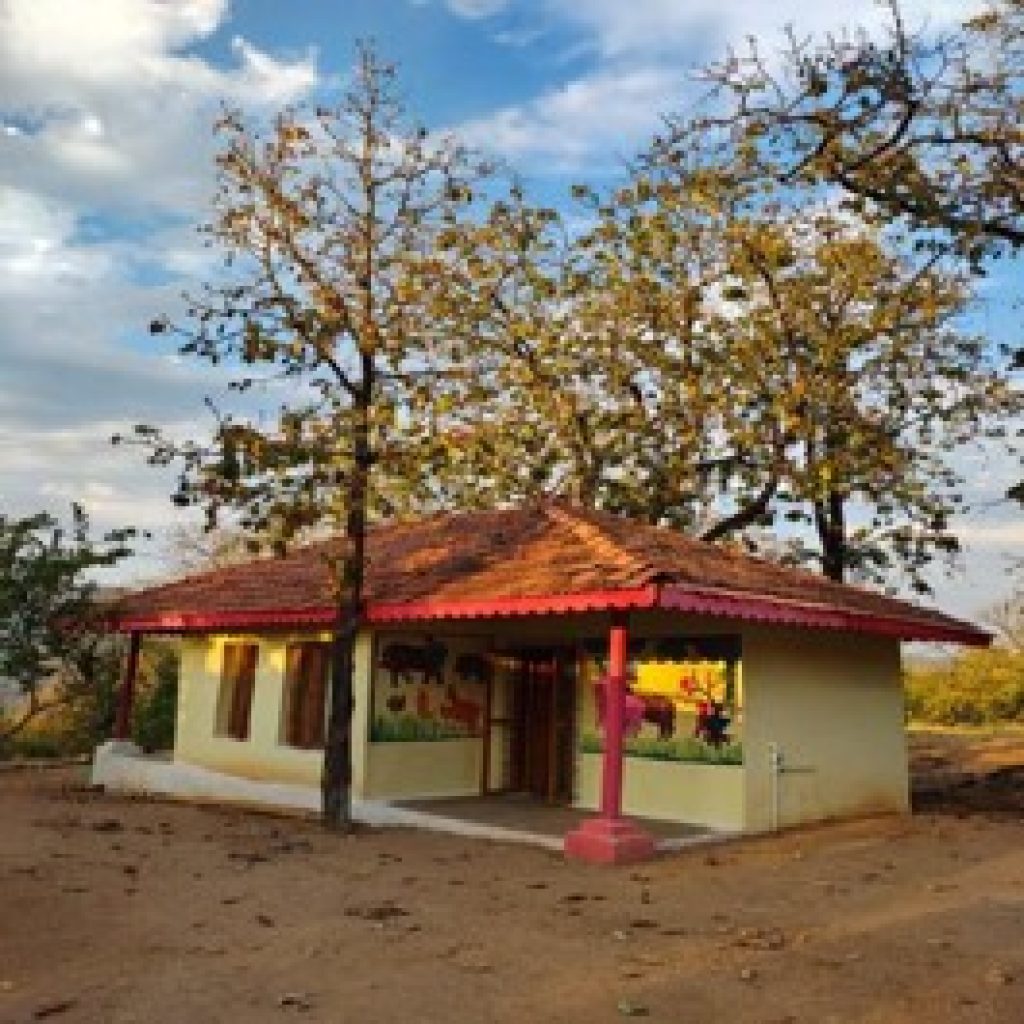
Our journey began at Chimtipur, a small settlement in Patalkot where Madhya Pradesh Tourism has developed a beautiful tribal-themed homestay experience. The homestay has been designed to resemble a traditional Bharia home while offering modern comforts for visitors, providing a rare opportunity to experience tribal architecture and lifestyle without compromising on comfort.
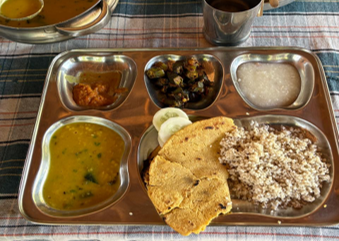
Before exploring the village, we were welcomed with a traditional tribal lunch prepared using local ingredients and age-old cooking techniques. The meal was simple yet incredibly flavorful, carrying the authentic taste of the region that you simply cannot find in restaurants.
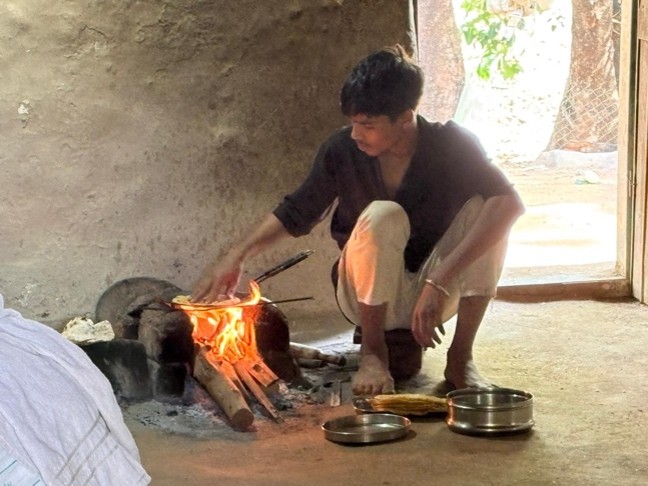
The spread included seasonal Bhindi (okra), freshly prepared Tamatar Chutney (tomato chutney), Dal (lentils), Tehri made with local rice, homemade Kheer (rice pudding), and Mace Ki Roti cooked on a traditional clay stove known as a Chulha.
Every dish felt deeply connected to the land and the people who prepared it. The women who cooked explained how they source ingredients from their own fields and the surrounding forest, maintaining food practices that have sustained their community for centuries.
What made the experience even more special was watching the preparation process. The traditional Chulha, fueled by firewood, imparted a smoky flavor to the rotis that modern gas stoves simply cannot replicate. This wasn’t just a meal—it was an education in sustainable food systems and the importance of preserving traditional cooking methods.
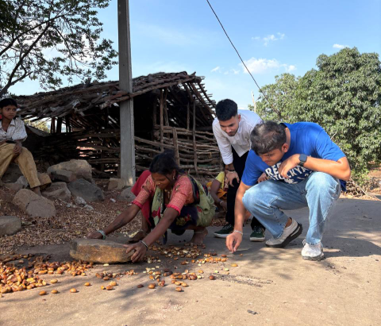
After lunch, we stepped into the village to interact with members of the Bharia community.
Our first stop introduced us to a local woman who was busy breaking “Guli” using traditional stone tools. She explained how the seeds are processed and later used for extracting oil, a practice that has been followed by tribal families for generations. Watching these traditional methods firsthand was fascinating. In a world dominated by machines and technology, it was refreshing to witness skills and knowledge that have been preserved through centuries. She told us that this oil is used both for cooking and for traditional medicinal purposes, demonstrating the multi-functional approach that characterizes tribal resource use.
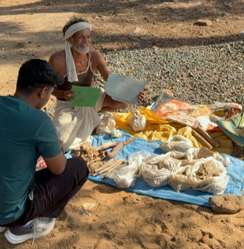
One of the most enlightening parts of our visit was meeting the village Bhumka, the traditional healer of the Bharia tribe. The traditional healer Bhumka serves as a guardian of indigenous medicinal knowledge and plays an important role within the community, treating common ailments using plants and herbs gathered from the surrounding forests.
He welcomed us warmly and introduced us to his collection of medicinal plants and herbs. As he carefully displayed each herb, he explained its traditional uses and healing properties with the confidence of someone who has spent a lifetime studying nature’s pharmacy. Some plants were used for stomach ailments, while others were believed to help with fever, joint pain, and common illnesses.
“This one,” he said, pointing to a leafy shrub, “cures digestive problems. We make a tea from these leaves.” He moved to another plant. “This bark reduces fever when boiled and consumed. And this root,” he held up a gnarled piece, “helps with joint pain, especially during the monsoon season.”
The Bhumka knew not just which plants to use, but also the proper dosage, preparation methods, and potential side effects.
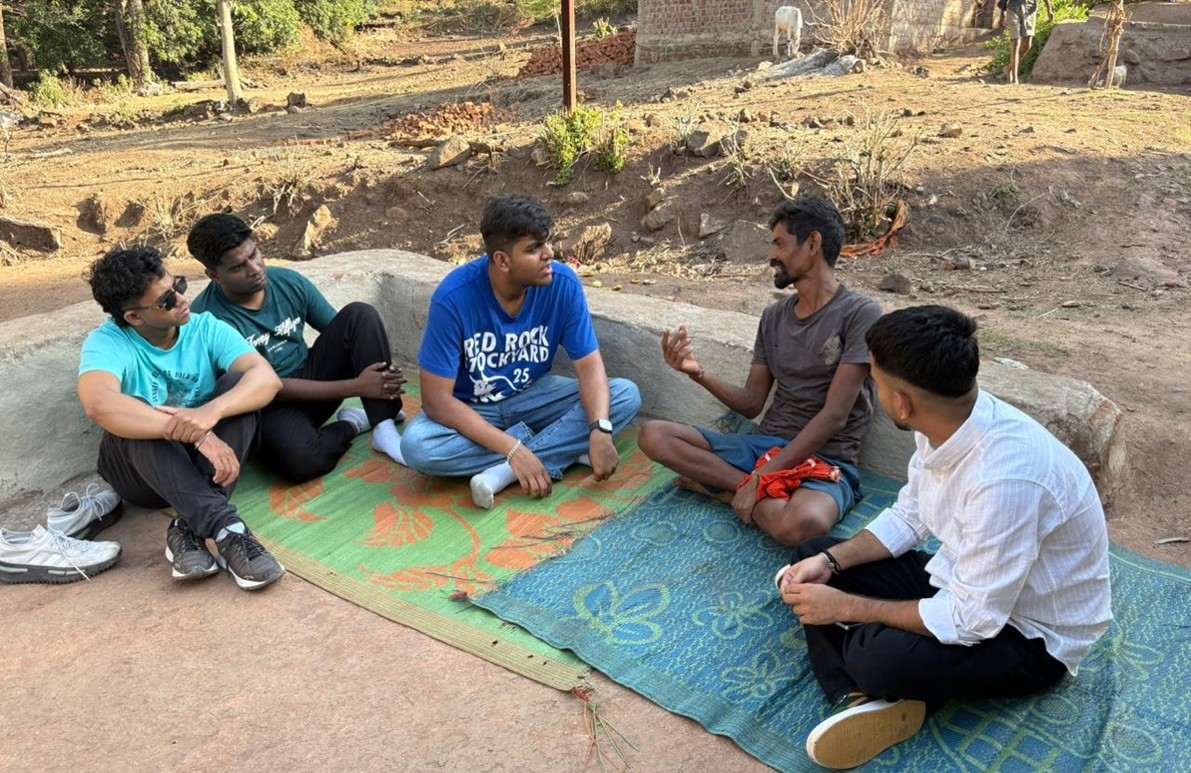
Our local guide, Arjun, then led us deeper into the village where we visited several Bharia homes and spent time interacting with local families. What stood out most was the warmth and enthusiasm of the people. Far from being reserved, the villagers were eager to share stories about their lives, traditions, and history.
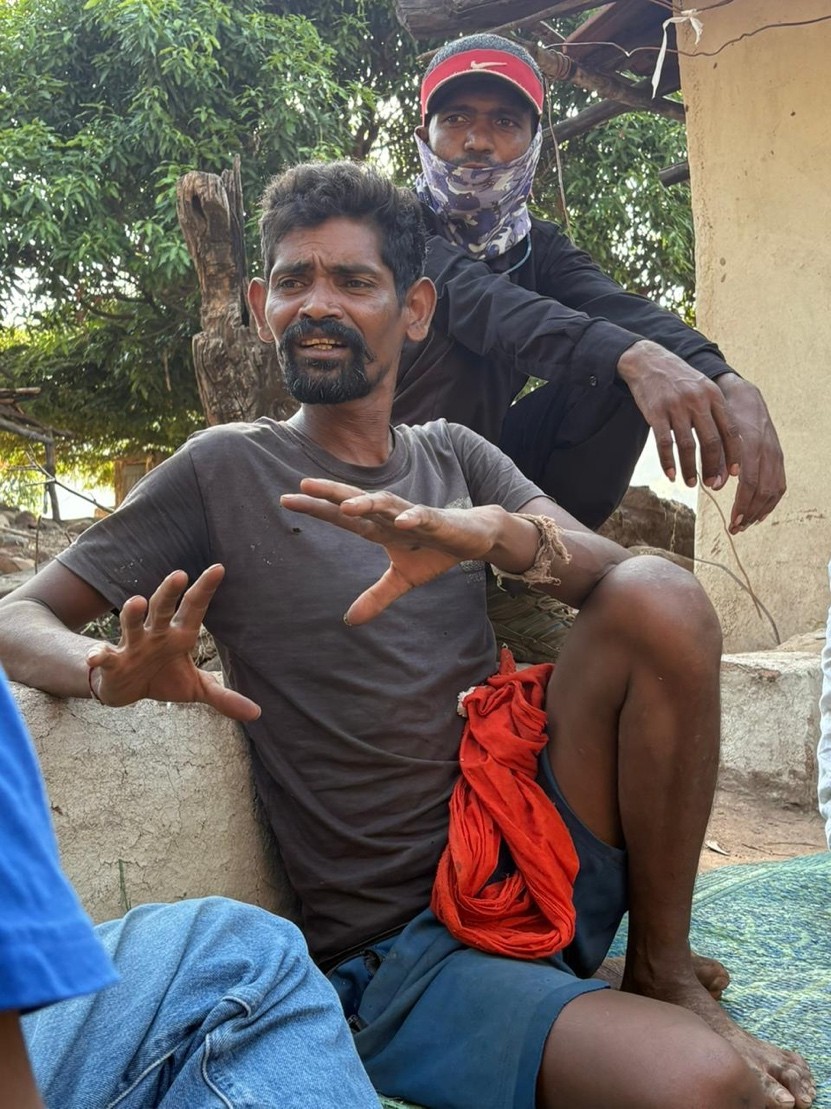
One resident, Premlal, told us that his family has been living in Patalkot for six generations. As we sat on woven mats outside his home, he shared fascinating insights into the community’s past. He explained that older generations primarily spoke their traditional Bharia language. To our delight, he even demonstrated how the language sounded—a melodic, rhythmic speech pattern quite different from Hindi.
“Today, most younger members of the community speak Hindi and use it in everyday conversations,” Premlal explained. “But we still teach our children the old language at home. It’s important to remember where we come from.”
The discussion soon turned toward their annual tribal celebrations. Premlal told us about vibrant Bharia tribe festivals celebrated around Navratri when the entire village comes together to dance, sing, wear traditional attire, and celebrate their cultural identity. His eyes lit up as he described the festivities.
“During the festival, everyone wears their best traditional clothes,” he said. “The women wear colorful sarees with silver jewelry, and the men wear turbans and traditional kurtas. We dance all night, and the entire valley echoes with our songs and drums.”
He even invited us to return and join the festivities this year.
During our conversations, the villagers repeatedly recommended visiting Patalkot after the monsoon season. As they described the transformation of the valley, it sounded almost magical.
“The entire landscape turns lush green, with dense vegetation covering the hills,” Premlal explained. “Since the villages are located inside the valley, visitors can witness countless streams and waterfalls cascading from the surrounding cliffs.”
According to the locals, wherever you look during the monsoon season, you can spot waterfalls flowing down the valley walls.. After hearing their descriptions, we knew we would have to return during that season to witness Patalkot Valley in its full glory.
The best time to visit is typically from July to September when the monsoon rains have rejuvenated the landscape, or from October to February when the weather is pleasant and the post-monsoon greenery is still vibrant.
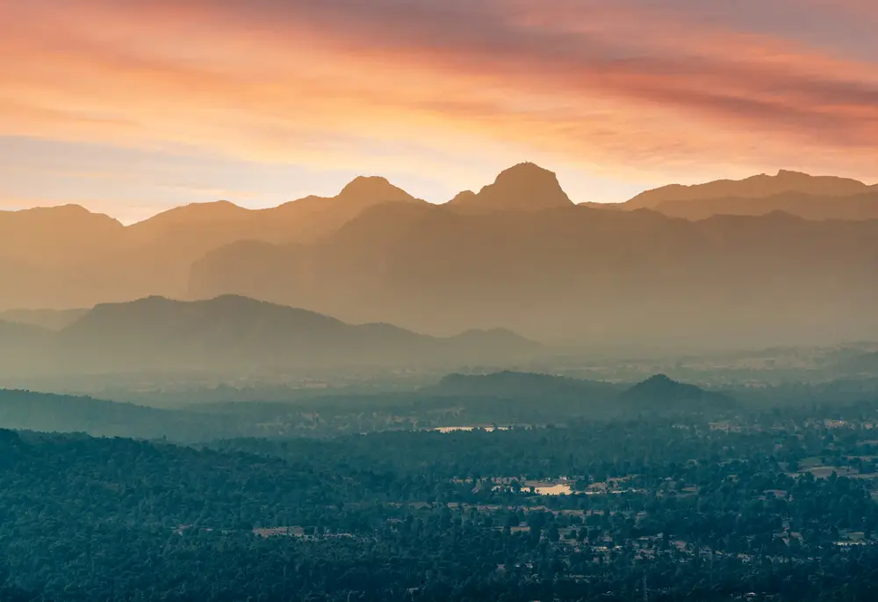
As the afternoon drew to a close, we made our way to the famous sunset viewpoint overlooking Patalkot Valley. No photograph can truly capture what we experienced there.
Standing at the edge of the viewpoint, looking across the vast valley surrounded by the Satpura hills, felt almost surreal. The golden sunlight slowly illuminated the landscape while clouds drifted across the horizon. With a cup of hot tea and local snacks in hand, we sat quietly and absorbed the beauty around us.
The view was so breathtaking that words seemed inadequate. It was one of those rare travel moments where you simply need to be present, to breathe it in, and to feel grateful for the opportunity to witness such natural beauty.
[Photo Suggestion: Sunset view across Patalkot Valley with Satpura hills in background]
As night fell, our tribal experience continued with a cultural performance by members of the Bharia community. The villagers gathered to showcase two traditional folk dances—Bhadam and Setam. These dances have been passed down through generations and form an important part of the community’s cultural identity.
The Bhadam dance told stories of harvest and celebration, with energetic movements that reflected the joy of a successful crop season. The Setam dance was more contemplative, with slower, more deliberate movements that seemed to honor the connection between the community and their land.
Unlike staged performances designed for tourists, these dances reflected living traditions that continue to be practiced within the community today. The performers weren’t just entertaining us—they were celebrating their heritage with genuine pride and joy. Several villagers encouraged us to join in, and though our steps were clumsy, the laughter and encouragement from the community made it a joyful experience.
Our visit to the Bharia tribe was facilitated through a community-based tourism initiative that ensures the tribe benefits directly from visitor interactions. When planning tribal tourism Madhya Pradesh, it’s essential to prioritize ethical engagement with local communities.
Learning about the Bharia tribe taught us valuable lessons about sustainable living and community bonds that modern society has largely lost. Their way of life—living in harmony with nature, sharing resources, maintaining strong social bonds—offers insights that are increasingly relevant in our environmentally challenged world.
The experience reminded us that travel is at its best when it creates meaningful connections between people. It’s not about checking destinations off a list, but about genuine cultural exchange conducted with humility and respect.
If you’re considering a visit to tribal areas in Madhya Pradesh, go with the right intentions. Educate yourself beforehand. Choose ethical operators who work directly with communities. Respect boundaries. Listen more than you speak. Give back more than you take. And remember that you’re a guest in someone’s home, someone’s sacred space, someone’s ancestral land.
Our visit to Patalkot was far more than a sightseeing excursion. It was an opportunity to learn directly from a community that has preserved its traditions, knowledge, and connection to nature for generations.
From sharing a traditional meal and meeting the village healer to listening to stories from local residents like Premlal and witnessing centuries-old folk dances, every moment offered a deeper understanding of the Bharia way of life. Most importantly, the experience reminded us that travel is at its best when it creates meaningful connections between people.
Patalkot is not just a destination; it is a living cultural landscape where nature, tradition, and community continue to thrive together. For travelers seeking authentic cultural experiences in Madhya Pradesh, a visit to the Bharia tribe of Patalkot is an experience that will stay with you long after the journey ends.
The Bharia tribe opened their community to us, shared their stories, and trusted us to tell those stories with respect. As you plan your travels, consider seeking out experiences that challenge you, educate you, and connect you with communities different from your own. But do so responsibly, ethically, and with genuine respect.
Looking to explore the tribal heartland of Madhya Pradesh? Join us on a curated cultural journey to Patalkot and Tamia, where you can experience traditional tribal hospitality, local cuisine, indigenous medicinal knowledge, breathtaking landscapes, and authentic folk traditions while supporting responsible community-based tourism.
Have you visited tribal communities in Madhya Pradesh? What were your experiences with responsible tourism? Share your thoughts and stories in the comments below, and let’s continue this important conversation about ethical travel and cultural preservation.
Comfortable • Safe • Affordable
×WhatsApp us